
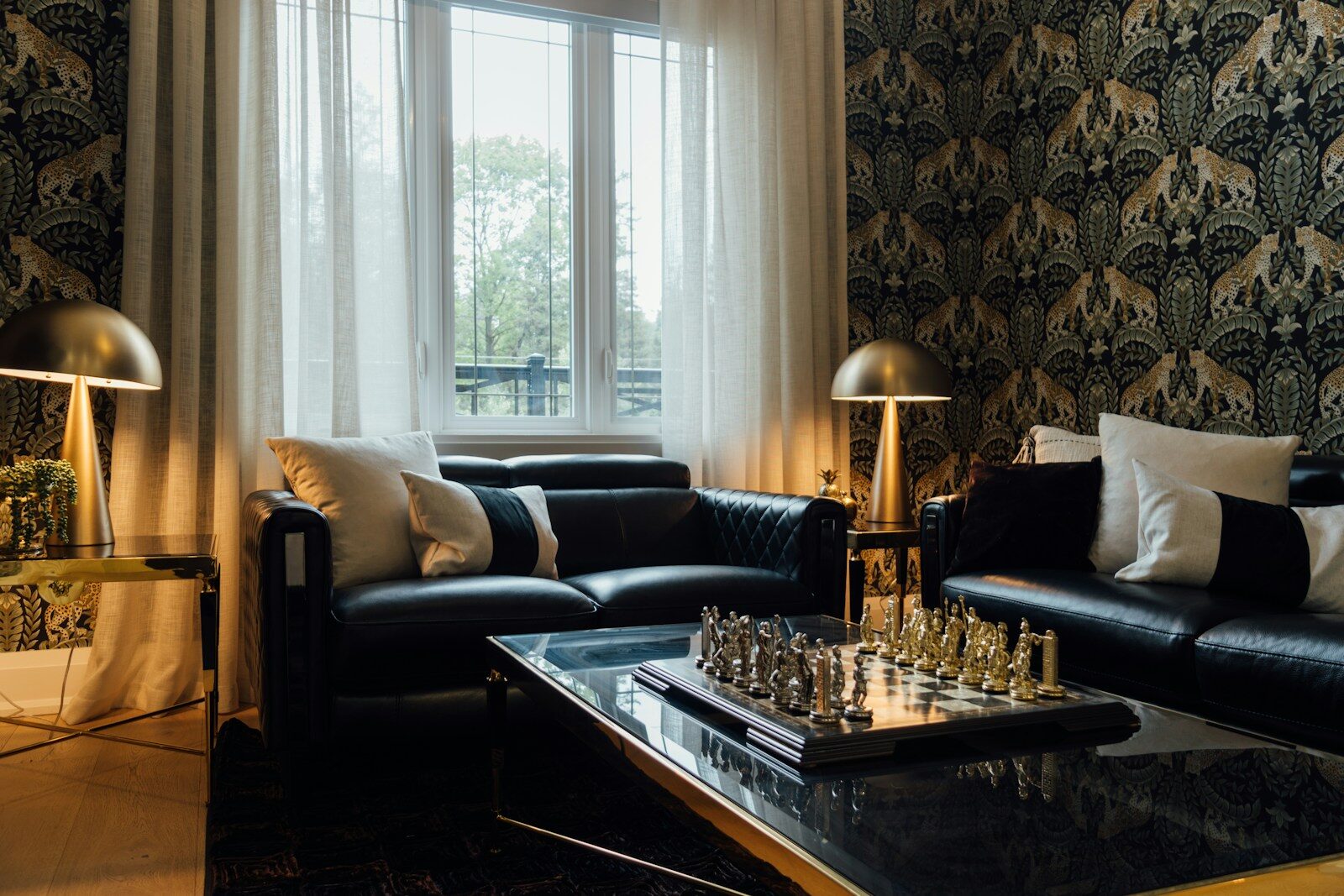
Wallpaper has come a long way from the heavily patterned designs that once dominated living rooms and hallways. Today’s choices range from delicate botanical prints and understated textures to oversized florals, geometric patterns and striking murals. Whether you’re decorating a whole room or looking for a way to introduce a little more personality, wallpaper offers plenty of opportunities to change the feel of your home.
More Than Just a Decorative Background
One of the biggest advantages of wallpaper is its ability to influence how a room looks and feels. A carefully chosen pattern can make a plain space more interesting, introduce a sense of depth or help bring together colours used elsewhere in the room. Even subtle designs can have a noticeable impact, particularly when they add texture or a gentle variation in tone.
For anyone who prefers a relatively neutral interior, wallpaper doesn’t have to mean bold colours or busy patterns. Linen-effect finishes, soft metallic details and understated natural designs can add interest without competing with furniture, flooring or accessories. These options work particularly well in bedrooms and living spaces where a relaxed atmosphere is important.
Choosing the Right Pattern for Your Room
Scale is worth considering before committing to a design. Large patterns can look fantastic in spacious rooms, where there is enough room to appreciate the detail without the walls feeling overcrowded. Smaller prints, meanwhile, can work beautifully in compact spaces, although there is no hard rule that says a small room must have a small pattern.
The amount of natural light also makes a difference. Dark wallpaper can create a cosy, intimate atmosphere, particularly in rooms used during the evening. Lighter designs can help reflect available light, making them useful in north-facing rooms or areas that feel a little enclosed.
It’s also worth thinking about how the wallpaper will work with existing furnishings. A pattern that picks up a colour from the sofa, curtains or rug can help create a more coordinated appearance without making everything look too carefully matched.
Feature Walls or Full-Room Coverage?
The feature wall remains a popular option, particularly for people who want to experiment with pattern without committing to decorating an entire room. Behind a bed, around a fireplace or on the wall immediately visible when entering a living room, wallpaper can create a natural focal point.
However, covering all four walls can sometimes produce a more considered result. Particularly with softer patterns, repeating the design around the room creates continuity and avoids the slightly disconnected appearance that can happen when one wall is dramatically different from the others.
Smaller spaces such as downstairs toilets, entrance halls and cloakrooms are also ideal places to be a little adventurous. These areas can accommodate patterns and colours that might feel too dominant in a larger living space.
Getting the Preparation Right
Even the most beautiful wallpaper can disappoint if the preparation isn’t up to scratch. Walls should be clean, dry and reasonably smooth, with any holes or imperfections filled before decorating begins. Old wallpaper may need to be removed completely, while newly plastered walls usually require appropriate preparation before papering.
It’s important to check the manufacturer’s instructions too, as different wallpapers have different hanging requirements. Some are designed for paste-the-wall application, while others require paste to be applied directly to the paper.
Wallpaper is an opportunity to do more with your interiors than simply choosing another paint colour. From subtle textures to confident statement designs, the right choice can give a room an entirely different character and make the walls an integral part of the overall scheme.
Photo by Ariel Domenden.